Why Do Cracks Appear in New Houses in Pakistan
Wall cracks in new houses are common in Pakistan. Learn the main causes of structural and plaster cracks and how proper construction can prevent them.
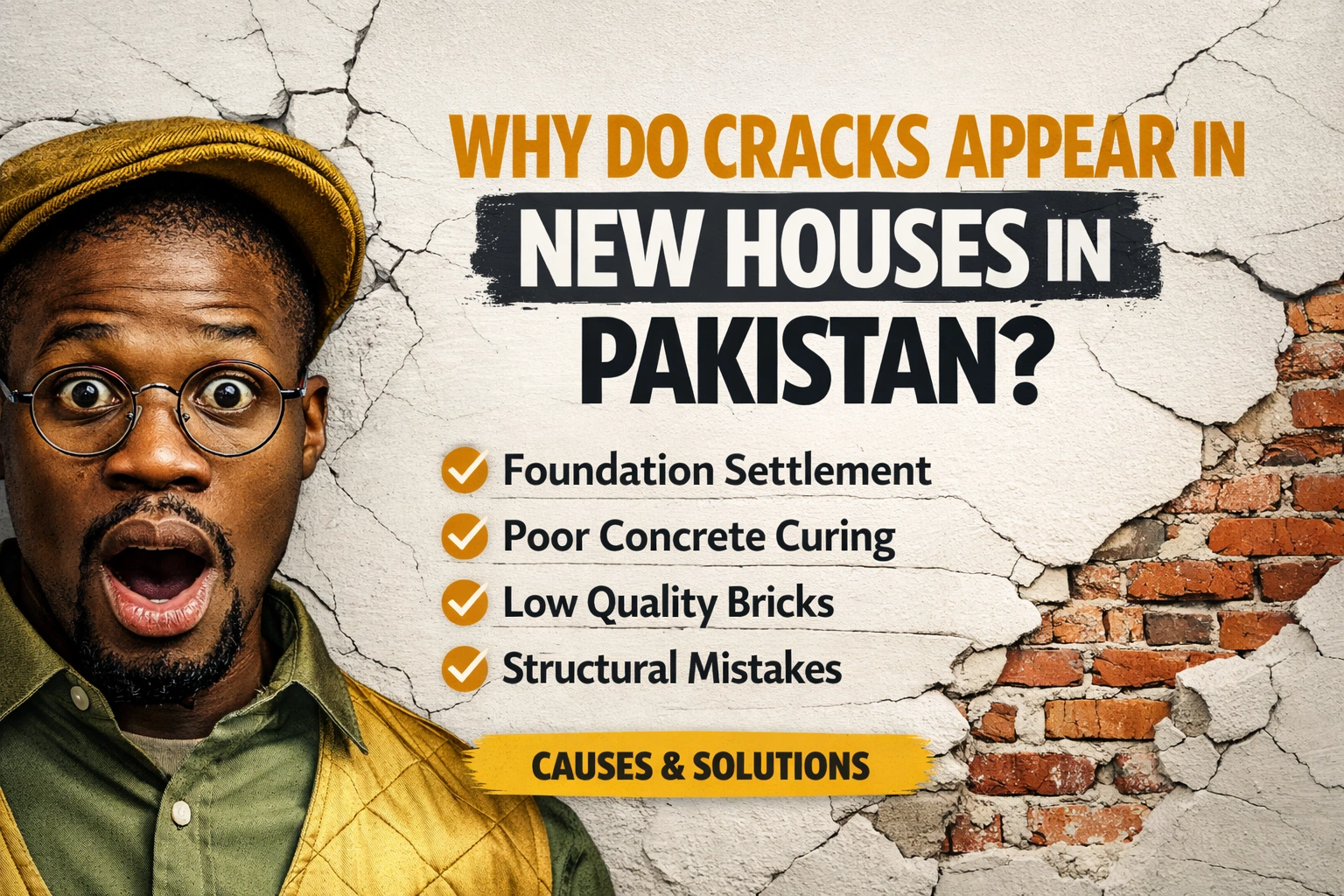
Why Do Cracks Appear in New Houses in Pakistan? One of the most common concerns homeowners face after building a new house is the appearance of cracks in walls or ceilings. Many people expect a newly constructed home to remain perfect for years, so seeing cracks shortly after construction can be worrying. In many cities across Pakistan, including Lahore, Islamabad, and Gujranwala, homeowners frequently encounter this issue. While some cracks are minor and harmless, others may indicate construction problems that should be addressed early. Understanding the reasons behind these cracks can help homeowners prevent serious structural damage. Common Types of Cracks in Houses Before discussing the causes, it is important to understand the types of cracks that may appear in houses. Hairline Plaster Cracks These are thin cracks that appear on plaster surfaces. They are usually cosmetic and caused by plaster shrinkage. Structural Cracks These cracks may appear in beams, columns, or walls and could indicate structural stress or foundation issues. Settlement Cracks These occur when the building foundation settles unevenly into the soil. Major Causes of Cracks in New Houses 1. Foundation Settlement One of the most common causes of cracks in houses is foundation settlement. When a building is constructed, the soil beneath the foundation may gradually shift or compress under the weight of the structure. If the soil is not properly compacted before construction, the foundation may settle unevenly, leading to cracks in walls and ceilings. This problem is more common in rapidly developing residential areas where houses are built quickly without proper soil preparation. 2. Poor Curing of Concrete Concrete curing is an essential step in construction. Curing allows concrete to gain strength by maintaining proper moisture during the hardening process. If curing is not done properly, concrete may lose moisture too quickly, leading to shrinkage cracks. In hot climates like Punjab, where temperatures can rise significantly during summer, proper curing becomes even more important. 3. Use of Low-Quality Bricks or Materials Construction materials play a major role in the durability of a building. Using low-quality bricks, weak mortar, or poor cement mixtures can lead to cracks over time. Some contractors try to reduce costs by using inferior materials, which may result in structural or plaster cracks shortly after construction. Quality materials ensure better bonding and long-term stability of walls. 4. Structural Design Mistakes Another possible reason for cracks is improper structural design. If beams, columns, or load-bearing walls are not properly designed, the building may experience uneven stress distribution. Professional architectural and structural planning helps prevent such problems by ensuring that the structure safely supports all loads. 5. Temperature Expansion and Shrinkage Buildings naturally expand and contract due to temperature changes. In regions with extreme heat, building materials may expand during the day and contract at night. Over time, this movement can create small cracks in plaster or walls. How Architects Prevent Cracks in Houses Professional architects and engineers take several measures to reduce the chances of cracks appearing in buildings. These include: proper soil testing before construction strong foundation design correct concrete curing procedures use of high-quality construction materials proper structural calculations By carefully planning each stage of construction, many common cracking issues can be avoided. When Should You Be Concerned About Cracks? Not all cracks indicate serious problems. However, homeowners should consult professionals if cracks: continue to grow over time appear diagonally across walls occur near doors or windows affect structural elements like beams or columns Early inspection can prevent small problems from turning into major structural issues. Final Thoughts Cracks in new houses can be alarming, but they are often caused by preventable construction mistakes such as poor curing, foundation settlement, or low-quality materials. With proper architectural design, structural planning, and quality construction practices, most of these problems can be avoided. For homeowners building houses in Pakistan, working with experienced architects and engineers can ensure that the structure remains safe, durable, and long-lasting.
Want to work with us?
Contact our team in Gujranwala for architecture and design consultations.
Get in Touch